
EICR Testing in Edinburgh & the Lothians
Electrical Installation Condition Reports for landlords, homeowners and businesses. Carried out to BS 7671 standards, clearly explained and full certification provided.
Who needs an EICR?
Landlords
In Scotland, private landlords must have an electrical safety inspection carried out before a property is first let, then at least every five years. The inspection has two parts: an EICR on the fixed installation and PAT testing on any appliances you provide. Your tenants must receive a copy of the most recent report before their tenancy starts. We carry out both parts in a single visit, so you get everything you need to meet the Repairing Standard in one go.
Homeowners
There's no legal requirement for owner-occupiers, but an EICR is recommended every ten years. It's well worth having one if you're buying an older property, planning a renovation, or noticing warning signs like tripping circuits or scorched sockets. You'll get a clear picture of what you're working with before you spend money.
Businesses
Under the Electricity at Work Regulations 1989, employers must maintain electrical systems so they don't cause danger. Regular periodic inspection is the standard way to show you've met that duty, and many insurers and commercial landlords will ask to see a current report. Offices and shops are typically inspected every five years, with shorter intervals for some premises types.
How we carry out your EICR
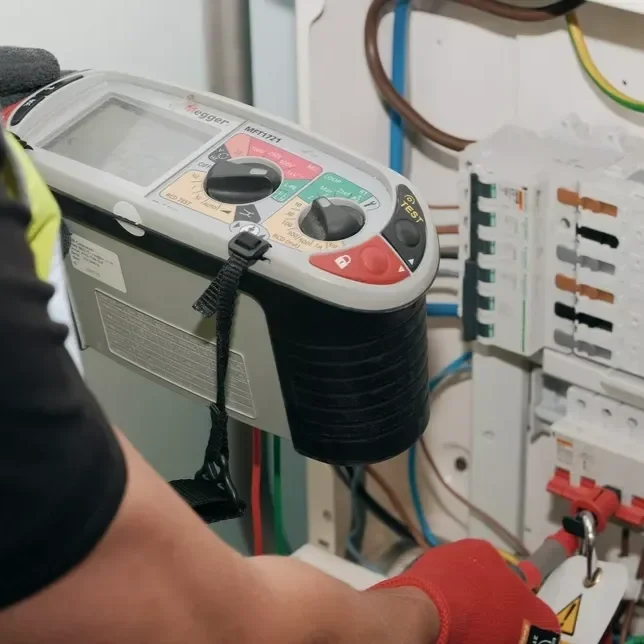
Every inspection follows the procedure set out in BS 7671, the UK wiring regulations, using calibrated test equipment.
Scope and booking. We confirm the property size, number of consumer units and circuits, and access arrangements. For rentals, we can arrange access directly with your tenants or letting agent.
Visual inspection. We check the consumer unit, protective devices, wiring, accessories, earthing and bonding, plus fixed equipment like electric showers, heaters and hard-wired alarms. We're looking for damage, deterioration and anything that falls short of current standards.
Testing. Each circuit is isolated and tested for continuity, insulation resistance, polarity, earth fault loop impedance and RCD operation. The power will be off at points, and we'll agree timings with you beforehand.
Your report. You'll receive a full EICR with an overall result of satisfactory or unsatisfactory, and every observation clearly coded and explained in plain English. [Reports are sent digitally within X working days.]
Remedial work. If anything needs fixing, you'll get a clear, itemised quote. Once the work is done, it's certified so you have a complete paper trail.
If we find anything immediately dangerous, we'll make it safe on the spot where possible and tell you straight away.
The certificates you'll receive
Electrical Installation Condition Report (EICR): the full report on the condition of your installation.
PAT records: an equipment register and test results for landlord-supplied appliances, with every item labelled.
Minor Electrical Installation Works Certificate: issued for smaller remedial work, such as replacing damaged accessories or fixing a fault on an existing circuit.
Electrical Installation Certificate (EIC): issued for larger work, such as a consumer unit replacement or new circuits.